
Why Established Brands Prefer Manufacturers with In-House R&D Capabilities
When choosing a microneedling pen manufacturer, price, MOQ, lead time, and product range are often the first factors that brands compare.
For established brands, however, these factors are only part of the decision.
A more important question is:
Can this manufacturer turn a product idea into a reliable, manufacturable product and continue improving it over time?
This is why in-house R&D and engineering capabilities have become increasingly important when brands evaluate long-term OEM and ODM manufacturing partners.
For a growing brand, choosing a manufacturer with strong R&D capabilities is not simply about producing the next order. It is about finding a partner that can support the development of future products.
Manufacturing and Product Development Are Different Capabilities
Being able to manufacture an existing product does not necessarily mean that a factory can develop a new one.
Manufacturing mainly answers one question:
How can we produce an established design consistently?
R&D addresses a different challenge:
How can we turn a product requirement or concept into a practical design that can be manufactured at scale?
A microneedling pen may appear to be a relatively compact device, but its development can involve multiple interconnected areas, including:
- Industrial and structural design
- Motor and drive systems
- PCB and electronic control
- Battery and charging systems
- Cartridge interface and compatibility
- Vibration and noise control
- Materials and surface finishing
- Assembly and manufacturing tolerances
- Reliability and durability testing
Changes in one area can affect several others.
For example, improving motor performance is not simply a matter of selecting a more powerful motor. Engineers may also need to consider power consumption, battery life, vibration, noise, internal space, heat management, and long-term operating stability.
This is where the difference between manufacturing and engineering becomes clear.
A manufacturer does not only need to know how to make a product.
It should also understand why the product is designed in a particular way and how that design can be improved.
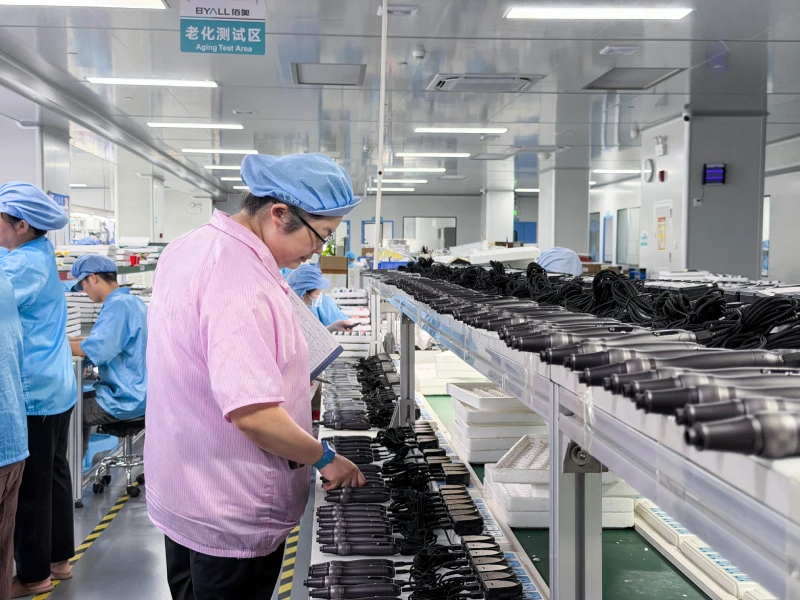
Established Brands Need Continuous Product Development
A new brand may initially focus on finding a suitable product and bringing it to market quickly.
As the brand develops, its requirements usually become more complex.
Customer feedback increases. Competing products evolve. Different markets may require different configurations. The brand itself may also develop a clearer product strategy.
The questions therefore begin to change.
Instead of asking:
“What products can we buy?”
the brand may start asking:
“What should our next product become?”
This can involve questions such as:
- Can the structure be improved?
- Can vibration or operating noise be reduced?
- Can the user experience be improved?
- Can the control system be optimized?
- Can different configurations be developed for different markets?
- Can the cartridge connection system be improved?
- How can the next generation be differentiated from competing products?
These questions cannot always be answered by selecting another product from an existing catalogue.
They require cooperation between the brand and the manufacturer’s R&D and engineering teams.
For established brands, therefore, the number of existing products a manufacturer offers is not the only consideration.
Another important question is:
Can the manufacturer help develop the next generation?
In-House R&D Can Reduce the Gap Between an Idea and Mass Production
Having a product idea is relatively easy.
Turning that idea into a product that can be manufactured consistently is much more difficult.
A typical development process may involve:
Requirement Analysis → Product Definition → Industrial Design → Structural & Electronic Engineering → Prototyping → Testing → Engineering Validation → Pilot Production → Mass Production
Problems discovered at any stage can increase development time and cost.
When structural design, electronics, tooling, testing, and manufacturing are handled by disconnected teams, communication becomes more complicated.
A design may work in theory but be difficult to manufacture.
A prototype may perform well but require an inefficient assembly process.
A feature may work successfully during development but become less consistent during larger production runs.
This is why close cooperation between R&D, engineering, quality, and manufacturing teams matters.
When these teams become involved early in the project, manufacturability can be considered during product development rather than after the design has already been completed.
For brands, this can help reduce unnecessary redesigns and improve the transition from concept to production.
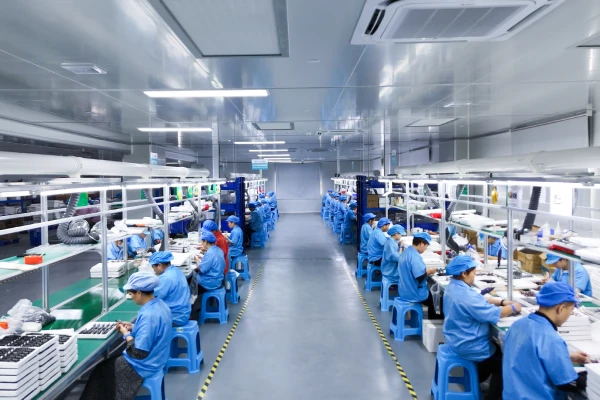
R&D Capability Is Also Problem-Solving Capability
Manufacturing partnerships are rarely free from technical challenges.
What often distinguishes manufacturers is not whether a problem occurs, but how they investigate and respond to it.
Consider abnormal vibration during product testing.
Simply identifying that the device is vibrating is not enough.
An engineering team may need to determine whether the source is related to:
- The motor
- The drive mechanism
- Assembly tolerances
- Internal components
- Cartridge load
- A particular operating speed
- Interaction between several components
After identifying the possible cause, the proposed solution must also be tested to ensure that it does not create another problem elsewhere in the system.
For this reason, R&D capability should not be understood only as the ability to develop new products.
It also represents a manufacturer’s ability to identify, analyze, test, and solve engineering problems.
For brands that intend to develop a product line over many years, this capability can be particularly valuable.
Established Brands Are Building Product Roadmaps, Not Just Individual Products
Established brands rarely plan only one model.
A product family may evolve through several generations.
The first generation may establish the product in the market.
The next may address customer feedback.
Later generations may improve performance, usability, design, or other product characteristics.
Additional models may then be developed for different positioning, markets, or customer requirements.
As a result, a manufacturing partnership may continue for years.
The manufacturer needs to understand the existing product while also being capable of supporting future development.
A mature development relationship can gradually create a continuous cycle:
Market Feedback → Product Requirements → R&D → Engineering Validation → Manufacturing → Market Feedback → Further Development
In this model, the manufacturer is no longer simply responsible for production.
It becomes part of the brand’s product development process.
From OEM Manufacturing to ODM and Product Development
Traditional OEM manufacturing focuses primarily on producing products according to defined requirements.
However, some brands require a deeper level of cooperation.
A brand may understand its market, customers, positioning, and commercial strategy, while the manufacturer contributes expertise in product structure, electronics, materials, manufacturing processes, supply chain management, testing, and mass production.
The value of this relationship comes from combining these capabilities.
The brand understands what the market needs. The manufacturer understands how those requirements can be translated into a manufacturable product.
This is where an R&D-driven ODM manufacturing partner can provide additional value.
BYALL: Combining Microneedling Pen R&D with Manufacturing
Guangdong BYALL focuses on the development and manufacturing of microneedling pens and related products.
Rather than treating product development and manufacturing as completely separate processes, BYALL continues to develop its in-house R&D, engineering, manufacturing, and quality management capabilities.
For brands with established product specifications, BYALL can provide OEM manufacturing support.
For brands seeking greater product differentiation, cooperation can extend to ODM development and customization, including product appearance, structure, functionality, configuration, packaging, and branding requirements.
For new product projects, R&D and engineering teams can become involved earlier in product definition, prototype development, engineering verification, and production preparation.
The objective is not simply to answer:
“How can we manufacture this order?”
A more important question is:
“How can this product be developed into a design that can be manufactured consistently and improved over time?”
This is the value of integrating R&D with manufacturing.
What Should Brands Evaluate When Choosing a Microneedling Pen Manufacturer?
When evaluating a long-term microneedling pen OEM or ODM manufacturer, brands can look beyond product catalogues and quotations.
Useful questions include:
- Does the manufacturer have an in-house R&D team?
- Are structural and electronic engineering capabilities available internally?
- Can the manufacturer independently develop new products?
- Is there a defined process for prototyping, testing, and engineering validation?
- How are technical problems investigated and documented?
- How do R&D, quality, and manufacturing teams work together?
- Can the manufacturer support continuous product improvement?
- What quality management systems, certifications, testing capabilities, patents, or other supporting documentation can be verified?
The answers may not appear directly on a quotation.
However, they can provide a clearer picture of whether a manufacturer is suitable for a long-term product development partnership.
Choosing a Manufacturer or a Long-Term Product Development Partner?
If a brand only needs an established, standardized product, there may be many suitable manufacturing options.
However, when the objective is to build a differentiated product portfolio and continue developing future generations, the selection criteria naturally become more demanding.
Price still matters.
Production capacity still matters.
Lead time still matters.
But R&D, engineering, quality management, documentation, and continuous development capabilities also deserve careful evaluation.
A mature manufacturing partnership is not only about fulfilling today’s purchase order.
It should also provide a foundation for tomorrow’s products.
Guangdong BYALL provides integrated support for microneedling pen OEM manufacturing, ODM customization, product development, engineering, and production.
If you are planning a new microneedling pen project, the conversation does not have to begin with:
“Which model would you like to buy?”
It can begin with a more useful question:
“What kind of product are you trying to develop?”
 info@drpenfactory.com