
How Can Microneedling Device Brands Deliver a Consistent Brand Experience Across Global Markets?
As the beauty device industry becomes increasingly global, brands face a challenge that goes far beyond simply selling products in more countries.
The real question is:
Can customers receive a consistent, reliable, and professional brand experience across different markets, distribution channels, and purchasing environments?
For microneedling device brands, this is particularly important.
Customers may see a single device, but their perception of the brand is shaped by much more than the product itself. Product design, manufacturing consistency, packaging, usability, quality control, documentation, distribution support, and after-sales service all contribute to the overall experience.
In other words, global expansion is not simply about selling the same product worldwide. It is about delivering the same brand standards consistently across markets.
1. Global Consistency Starts With the Product, Not Marketing
When entering international markets, many brands naturally focus on advertising, social media, distributors, and visual identity.
These areas matter. However, for microneedling devices, the product itself remains one of the most important foundations of brand trust.
Brands should consider several practical questions:
- Does the device perform consistently across different production batches?
- Is the operating experience consistent?
- Are compatible components and cartridges manufactured to defined specifications?
- Are product appearance, structure, labeling, and packaging properly controlled?
- Can quality standards be maintained as production volume increases?
- Can customers in different markets expect a comparable product experience?
If these fundamentals are unstable, marketing alone is unlikely to create sustainable brand equity.
This is why established brands and manufacturers increasingly focus on one important concept:
Repeatability.
Producing one successful batch is not enough. The greater challenge is maintaining defined standards when production grows from thousands to tens of thousands—or more—units.
This is where a structured manufacturing system becomes an important part of global brand building.
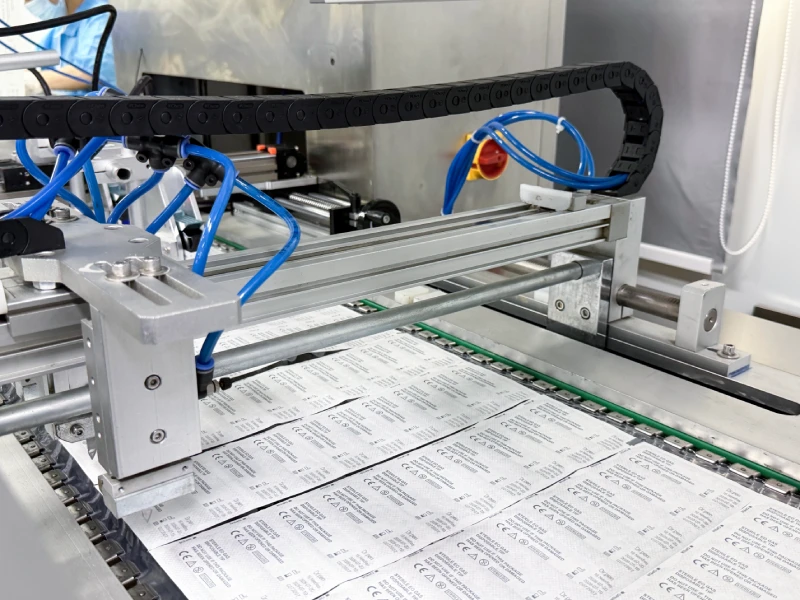
2. Consistent Brand Experiences Depend on Standardized Manufacturing
One of the greatest risks for an international brand is inconsistent product quality between markets or production batches.
A product may perform well in one market but generate complaints in another. An initial production run may meet expectations, while later batches show greater variation.
Eventually, these inconsistencies affect how customers perceive the brand itself.
A more systematic manufacturing approach therefore considers the entire production chain:
Materials → Supply Chain → Production → Assembly → Inspection → Packaging → Shipment → Traceability
Each stage should have defined controls designed to reduce unnecessary variation.
For companies building long-term brands, selecting a manufacturing partner should therefore involve more than comparing specifications and unit prices.
Brands should also evaluate the manufacturer’s quality management system, production controls, inspection capabilities, traceability processes, documentation, and relevant compliance credentials.
From this perspective, manufacturing consistency becomes part of brand consistency.
3. Compliance Is Becoming Part of the Global Brand Experience
In the past, many customers paid little attention to how beauty devices were manufactured.
That environment is changing.
Distributors, brand owners, platforms, regulators, and increasingly informed customers may want clearer answers to questions such as:
Who manufactured the product?
Where was it manufactured?
How is quality controlled?
Can production records and products be traced?
These questions become more important when products are distributed across multiple countries and regions.
Requirements relating to labeling, technical documentation, quality management, product classification, market access, and other regulatory matters can differ significantly between jurisdictions.
A globally oriented brand should therefore treat compliance as part of its business infrastructure rather than as an afterthought.
The relevant question is no longer simply:
Can we manufacture this product?
It is also:
Do we have the manufacturing, documentation, quality, and compliance foundations required for the intended market?
Compliance alone does not make a product more attractive. However, an appropriate compliance framework can reduce uncertainty as a brand expands internationally.
For companies planning to operate for many years, that foundation can be more valuable than short-term marketing gains.
4. Brand Consistency Also Means Service Consistency
The brand experience does not end when a customer receives the device.
In many cases, that is only the beginning.
What happens when a customer needs product information?
Who provides support when an issue occurs?
Can distributors obtain the documentation they need?
How are product updates communicated?
How does the brand respond to suspected counterfeit products?
Can business partners receive timely technical and product support?
These may appear to be after-sales questions, but they directly influence brand perception.
A mature international brand therefore needs more than basic customer service. It needs a broader service system that supports products throughout their lifecycle.
This can include pre-sales communication, product documentation, technical support, distributor assistance, after-sales processes, product updates, and long-term cooperation with business partners.
The product may influence the first purchase. Service often influences whether customers and partners continue the relationship.
5. What We Have Learned Through Dr. Pen
This philosophy has also shaped how Byall approaches microneedling device manufacturing.
Rather than viewing manufacturing simply as producing products according to an order, we believe manufacturers should consider what happens after those products enter the market.
Our experience developing and supporting our own brand, Dr. Pen, has reinforced this view.
Operating across different markets has shown us that sustainable brand development does not depend on a single successful product. It requires a system that can repeatedly support product quality, manufacturing consistency, appropriate compliance processes, and service.
From device development and manufacturing to quality control, packaging, documentation, channel support, and after-sales communication, each stage can influence how customers experience a brand.
For this reason, Byall continues to develop its manufacturing and quality management processes with consistency and traceability in mind.
We also recognize that different products and markets may be subject to different regulatory requirements. Relevant certifications, technical documentation, quality management documentation, and market-specific requirements should therefore be evaluated according to the product, its intended use, and the jurisdiction in which it will be marketed.
However, documentation and compliance are only part of the equation.
Compliance helps establish the conditions for market access. Service capability helps support a brand after it enters the market.
This is why we place significant emphasis on responsiveness when working with brand owners and distribution partners.
Depending on the project, this may include product development communication, OEM/ODM support, packaging and branding customization, technical documentation, production coordination, quality-related communication, and after-sales support.
For brands expanding internationally, a manufacturer should ideally become more than a source of products.
It should become a reliable part of the brand’s long-term supply and support system.
6. From Global Sales to a Global Brand
Selling internationally has become easier than ever.
Independent websites, e-commerce platforms, social media, international distributors, and global logistics allow brands to reach customers across borders relatively quickly.
But global sales and global branding are not the same thing.
A stronger question is:
Regardless of where, when, or through which authorized channel a customer purchases a product, can the brand continue to deliver the standards it promises?
Achieving this requires more than product specifications.
It depends on manufacturing consistency, quality control, appropriate compliance processes, documentation, traceability, channel management, and service capability working together.
For microneedling device brands, competition may therefore increasingly move beyond price, appearance, and individual specifications.
The deeper competition will be about systems.
Which companies can manufacture more consistently?
Which can maintain effective quality controls as production scales?
Which can support international partners more effectively?
And which can build trust over the long term?
At Byall, our manufacturing experience and the development of Dr. Pen continue to reinforce a simple principle:
Good manufacturing should work quietly behind the brand.
Customers should not need to think about the complexity behind production.
What they should experience is something much simpler:
A product and brand experience that feels consistent, reliable, and familiar wherever the brand is represented.
This article discusses general manufacturing, quality, branding, and market-access considerations for microneedling devices. Regulatory requirements and product classifications vary by product, intended use, and jurisdiction. Businesses should verify applicable requirements before placing products on a specific market.

 info@drpenfactory.com